
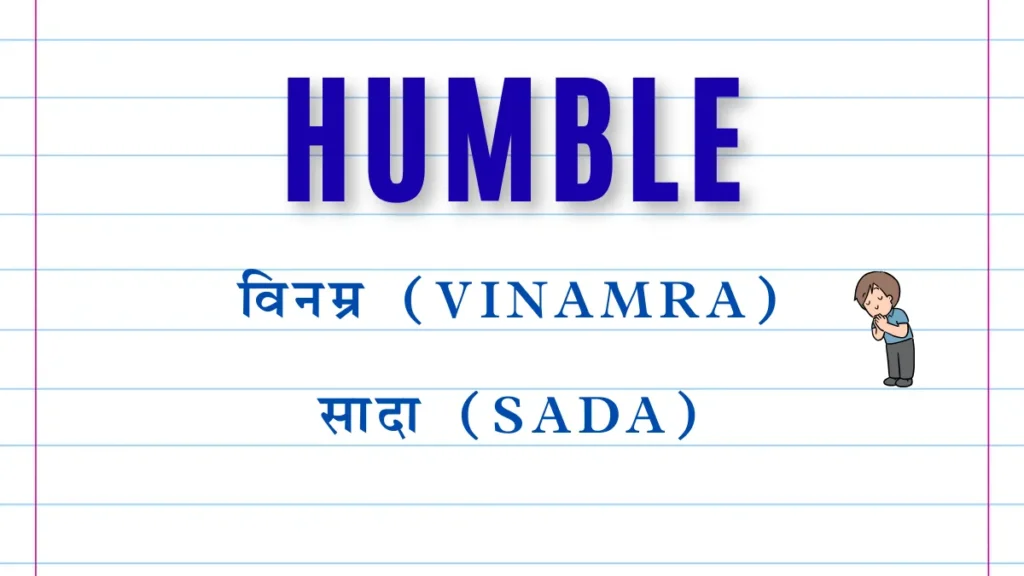
The humble meaning in Nepali is विनम्र (Vinamra), which captures the quality of being modest, respectful, and free from arrogance. When someone asks what does humble mean in Nepali, this word comes closest to expressing the full depth of humility as both a personal trait and a way of carrying yourself through life.
Humility in Nepali culture runs deeper than just politeness. It’s woven into how people greet each other, how they speak about their achievements, and how they navigate social hierarchies. A humble person in Nepal doesn’t just avoid bragging. They actively deflect praise, credit others, and maintain a grounded sense of self even when life elevates them.
The Cultural Depth of Humility
The word विनम्र (Vinamra) describes someone who remains approachable despite their position. Think of that teacher everyone loves because she never makes students feel small, or the neighbor who built a successful business abroad but still sits on the same plastic stool drinking tea with everyone else when he visits home. That’s vinamra in action.
But humble in Nepali language can take different shades depending on context:
- Humble Beginnings: Sometimes humility describes origins rather than personality. When people talk about their सादा सुरुवात (sada suruawat), their humble beginnings, they’re acknowledging they didn’t start with privilege. It connects them to struggle and hard work.
- Humble Requests: A humble request might use phrases like “यदि तपाईं को समय छ भने” (yadi tapain ko samaya chha bhane) – if you have time. The humility isn’t weakness; it’s social intelligence.
In Nepali households, children learn humility early. You don’t interrupt elders. You accept compliments with downplayed responses. You serve others before filling your own plate. These aren’t just manners; they’re training in विनम्रता (vinamrata), the state of being humble. It creates communities where people look out for each other, and where success doesn’t isolate you from your roots.
Everyday Examples
Here’s how “humble” appears in daily Nepali conversation:
| English Sentence | Nepali Translation (Devanagari) | Romanized Nepali |
| He is a humble leader who listens to everyone. | उहाँ एक विनम्र नेता हुनुहुन्छ जसले सबैको कुरा सुन्नुहुन्छ। | Uhaan ek vinamra neta hunuhunchha jasle sabaiko kura sunnuhunchha. |
| She made a humble apology for her mistake. | उनले आफ्नो गल्तीको लागि विनम्र माफी मागिन्। | Unle aafno galtiko lagi vinamra maafi maagin. |
| They grew up in a humble family with limited resources. | तिनीहरू सीमित स्रोतसाधनको एक सादा परिवारमा हुर्केका थिए। | Tiniharu simit srotsaadhanko ek sada parivaarma hurkeka thiye. |
| Despite his fame, he stayed humble and kind. | आफ्नो प्रसिद्धिको बावजुद पनि उनी विनम्र र दयालु रहे। | Aafno prasiddhiko bawaajud pani uni vinamra ra dayaalu rahe. |
| I have a humble request if you don’t mind. | मेरो एउटा सानो निवेदन छ यदि तपाईंलाई आपत्ति छैन भने। | Mero euta saano nivedan chha yadi tapainlai aapatti chhaina bhane. |
Related Words Worth Knowing
When you translate humble to Nepali, you open up a cluster of related concepts that orbit around modesty and self-awareness.
Words Similar to Humble:
- Modest: सादा (Sada) or साधारण (Saadhaaran) – capturing simplicity without pretense.
- Meek: नम्र (Namra) – gentle, though it doesn’t carry the passive connotation it sometimes has in English.
- Unassuming: निष्पक्ष (Nishpaksha) or सरल (Saral) – suggesting someone who doesn’t put on airs.
Words Opposite to Humble:
- Arrogant: अहंकारी (Ahankaari) – inflated self-importance that the culture instinctively rejects.
- Proud (Negative): घमण्डी (Ghamandi) – someone drunk on their own achievements.
- Boastful: डींग मार्ने (Ding maarne) – literally “one who strikes boasts.”
Final Thoughts
The texture of these words matters because they reveal cultural values. In Nepal, the person who talks endlessly about their accomplishments loses respect faster than the one who lets their work speak quietly. A humble person can be fiercely determined, but they do it without making everyone around them feel smaller.
Humility in Nepal also intersects with spiritual practice. Buddhist and Hindu teachings both emphasize the recognition that individual achievement is always dependent on circumstances beyond personal control. The farmer who credits a good harvest to favorable rain rather than solely to his labor isn’t being falsely modest—he’s acknowledging reality.
When you learn this word, you’re not just adding vocabulary. You’re touching something about how a culture imagines the good life, the good person, and the way humans ought to move through the world together.